Pile Gate
Back to all places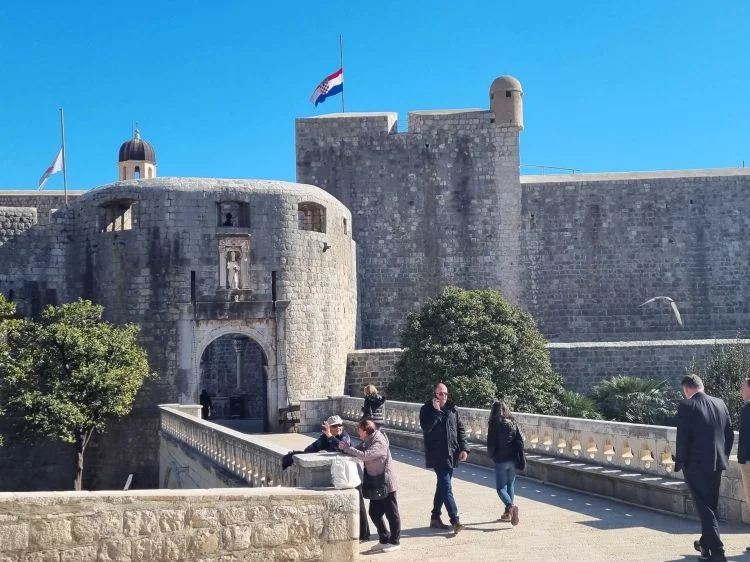
Pile Gate
0:00 / 1:49Pile Gate
Pile Gate, one of the main entrances to Dubrovnik's Old Town, is a historically and architecturally significant structure that has been a natural starting point for many visitors to the city. This imposing city gate was built in 1537 and has survived the years as one of Dubrovnik's most iconic landmarks.
Pile Gate was built in the 16th century and was originally one of the two main entrances to the old town. In the late 18th century, the Austrians added a few more entrances, including one on the north side, where the funicular station is located, and two on the sea side. An interesting fact is that every night the gate was closed and the key was given to the rector or mayor of Dubrovnik.
Above the gate is a Renaissance vault, in the niche of which is a statue of St. Blaise, the patron saint of the city. Entering the gate, a flight of stairs and a ramp leads to the inner gate, which dates back to 1460. At its top is a statue of Saint Blaise, again created by leading Croatian sculptor Ivan Meštrović. As you pass through the Gothic Arch, you will have a view of the Placa, or Stradun, Dubrovnik's pedestrian promenade.
The city wall walk dates back to the second half of the 15th century and the beginning of the 16th century. There was a time when everyone entering the Old Town of Dubrovnik had to bring a stone and two eggs. The size of the stone depended on the size of the person, and the eggs were used to make a cement-like mixture to glue the stones together. It was part of a strategy to build and strengthen the city's walls.
Today, the Pile Gate is still one of the main entrances to Dubrovnik's Old Town and a popular tourist destination, offering visitors the chance to immerse themselves in the city's rich history and experience its architectural beauty.
42.64176, 18.10679